Learn
-
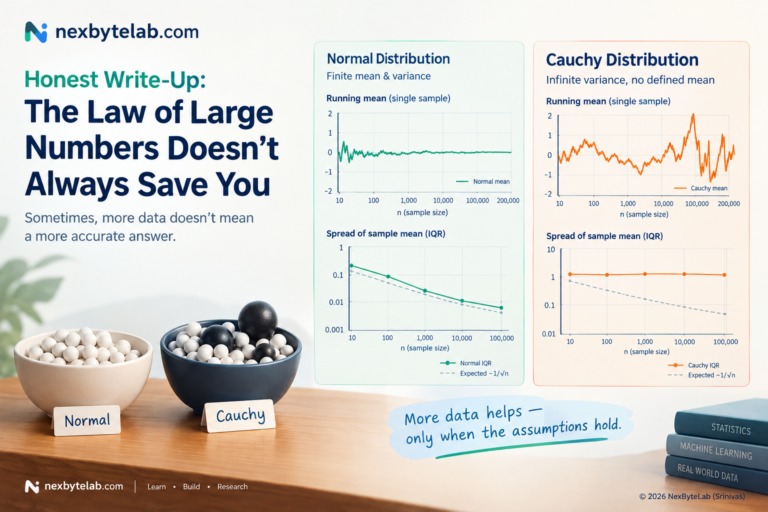
Honest Write-Up: The Law of Large Numbers Doesn’t Always Save You
A real Cauchy-distribution experiment shows the Law of Large Numbers and Central Limit Theorem can both fail — the sample mean never converges, no matter how much data you add.
-
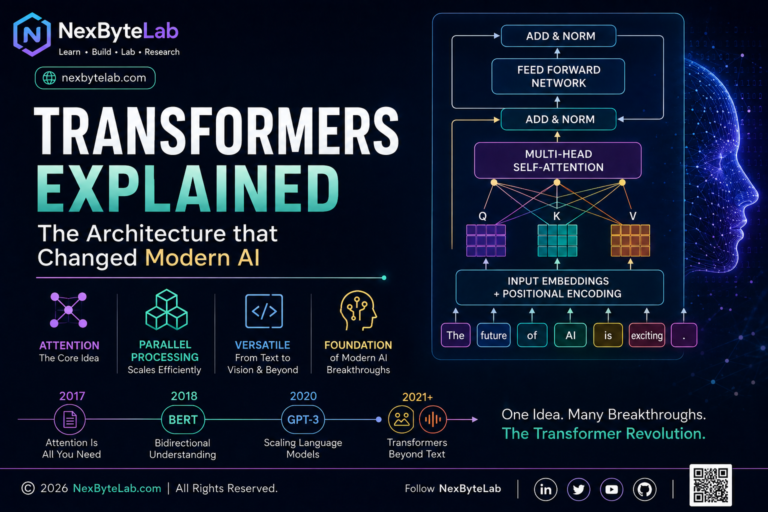
Transformers Explained: The Architecture that changed Modern AI
A beginner-friendly walkthrough of the architecture powering modern AI, from attention to embeddings.
-
Can an LLM Predict Crop Disease from Farmer Descriptions?
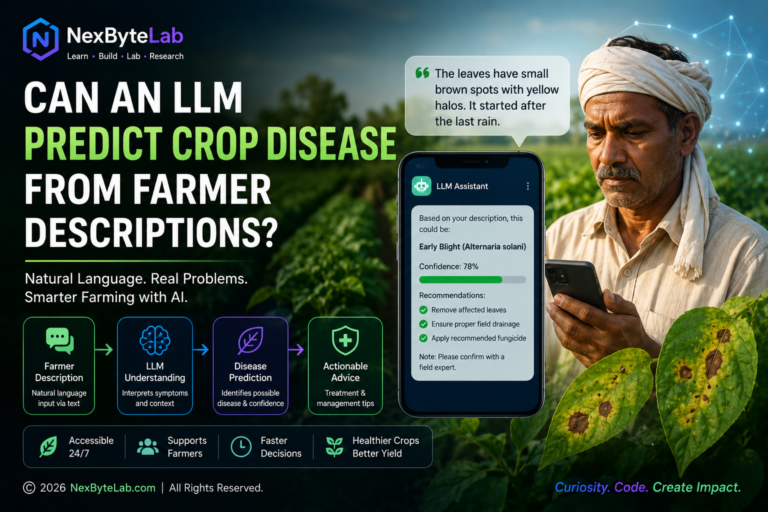
This piece looks at an LLM for crop diseases and pests: how well a language model can reason about crop problems from a plain-language description alone, with no photo required. A farmer may not describe a crop problem using the language of plant pathology. They may say: “The lower leaves have started turning yellow and…
Build
-

RAG | Experiments | FailuresHonest Write-Up: Why “Just Retrieve More Chunks” Doesn’t Scale in RAG
A real top-k retrieval experiment: precision stays near-perfect up to a point, then collapses — the exact failure the “retrieve more for safety” advice hides.
-
How Much Does Chunk Size Really Affect RAG Retrieval? A Reproducible Experiment
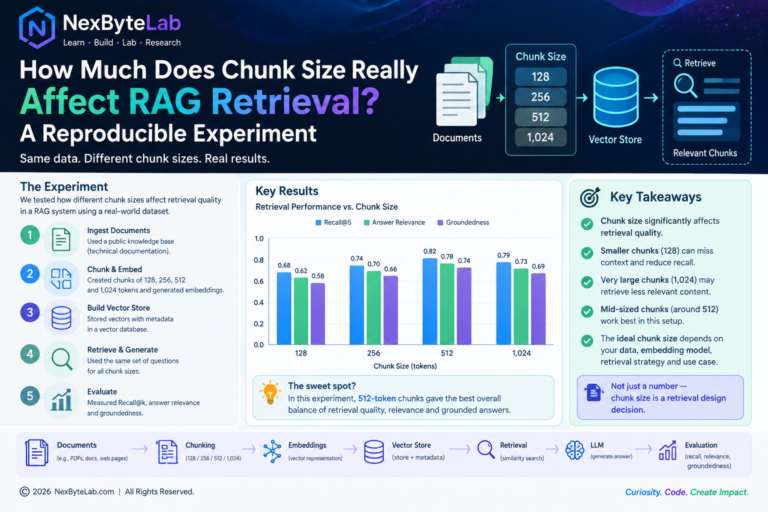
We run a small, fully reproducible TF-IDF retrieval experiment across chunk sizes 10-100 words to test whether chunk size really affects RAG retrieval quality — then check the result against 2026 production benchmarks.
-
From Raw Data to Reproducible Machine-Learning Experiments
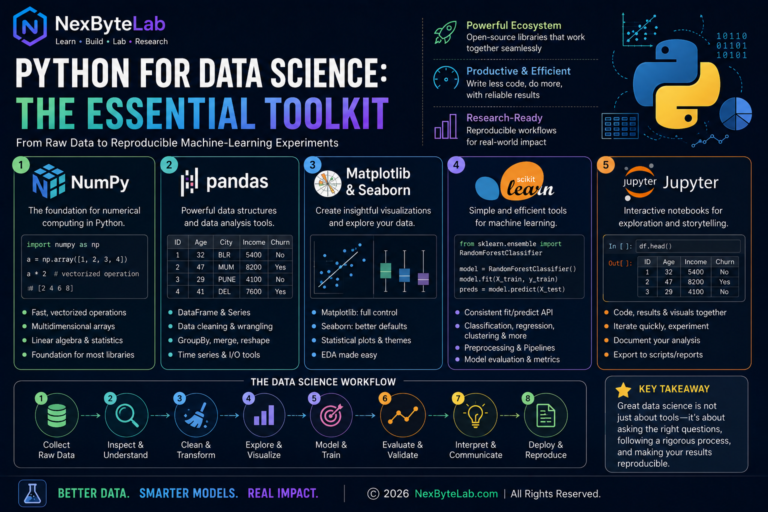
The core Python libraries you actually need to start doing data science, and when to reach for each one.
Lab
-
RAG | Experiments | FailuresHonest Write-Up: Why “Just Retrieve More Chunks” Doesn’t Scale in RAG
A real top-k retrieval experiment: precision stays near-perfect up to a point, then collapses — the exact failure the “retrieve more for safety” advice hides.
-
Honest Write-Up: The Law of Large Numbers Doesn’t Always Save You
A real Cauchy-distribution experiment shows the Law of Large Numbers and Central Limit Theorem can both fail — the sample mean never converges, no matter how much data you add.
-
INT8 Quantization Keeps Accuracy Intact, But Doesn’t Automatically Save Energy
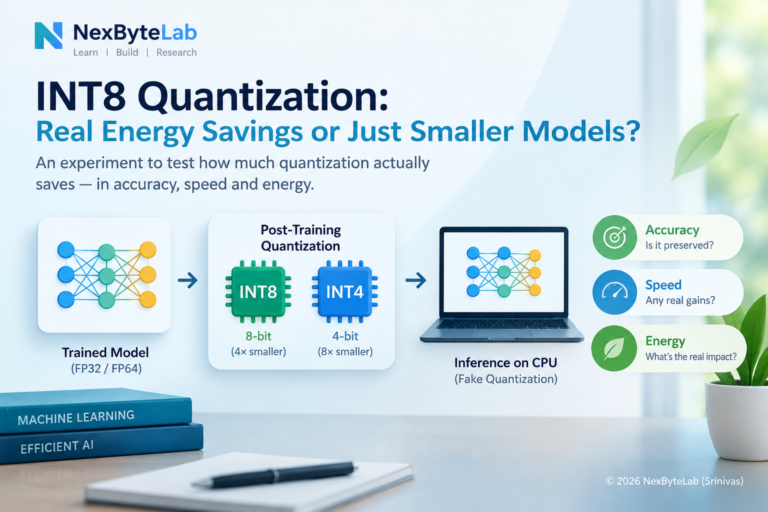
A 10-seed benchmark shows INT8 weight quantization cuts memory 8x with zero accuracy loss, but current GPU studies show it often doesn’t cut energy use.
Research
-
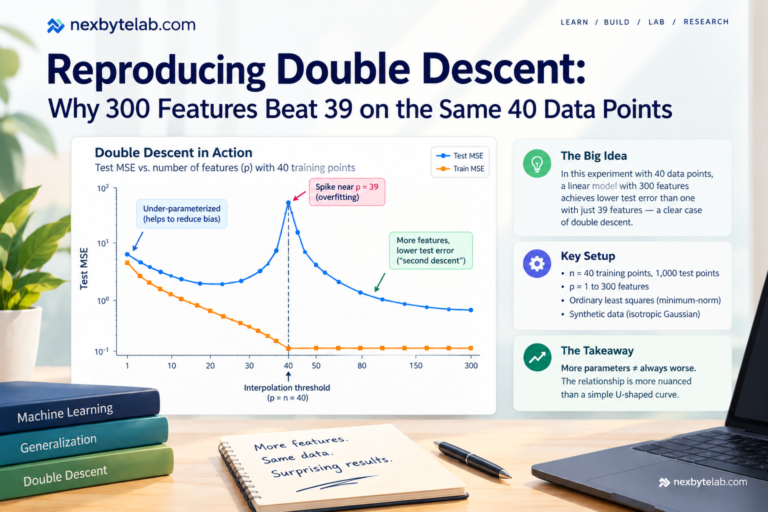
Reproducing Double Descent: Why 300 Features Beat 39 on the Same 40 Data Points
A minimal least-squares experiment reproduces double descent: test error peaks near the interpolation threshold, then drops 28x as parameters keep growing.
-
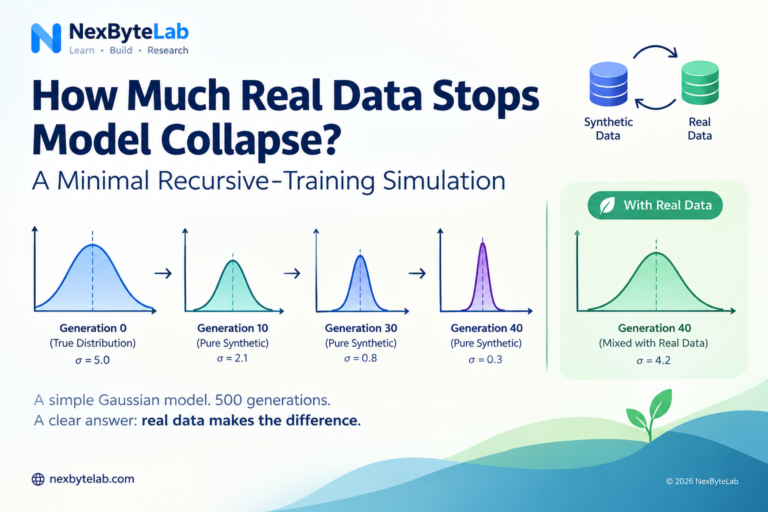
How Much Real Data Stops Model Collapse? A Minimal Recursive-Training Simulation
A 500-run simulation shows recursive synthetic training can shrink variance by up to 81% in 40 generations; mixing in 10% real data cuts that to under 2%.
-
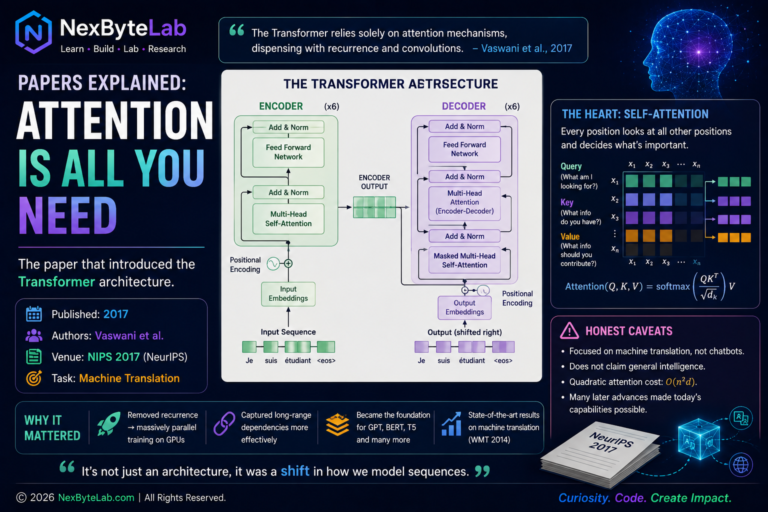
Papers Explained: Attention Is All You Need
Breaking down the paper that changed deep learning, in plain English.
Applied AI
-

Z-Score Thresholds vs. Isolation Forest: What Each Catches in Expense Fraud
A synthetic expense-fraud test: z-score thresholds catch 98% of obvious spikes but only 4% of contextual fraud; Isolation Forest catches 46% of the same cases.
-
INT8 Quantization Keeps Accuracy Intact, But Doesn’t Automatically Save Energy
A 10-seed benchmark shows INT8 weight quantization cuts memory 8x with zero accuracy loss, but current GPU studies show it often doesn’t cut energy use.
-
Can an LLM Predict Crop Disease from Farmer Descriptions?
This piece looks at an LLM for crop diseases and pests: how well a language model can reason about crop problems from a plain-language description alone, with no photo required. A farmer may not describe a crop problem using the language of plant pathology. They may say: “The lower leaves have started turning yellow and…
Resources
-
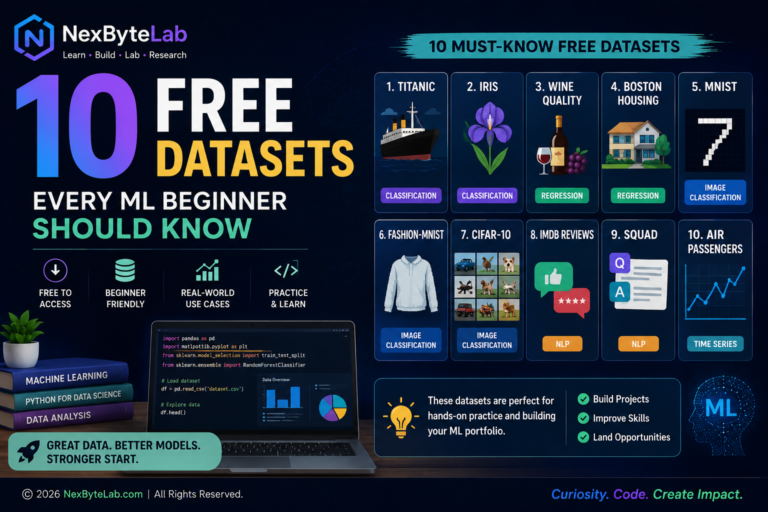
10 Free Datasets Every ML Beginner Should Know
A curated list of free, well-documented datasets for practicing machine learning end to end.
Algorithms